There is no such thing as the best home coffee roaster for beginners. However, choosing a home coffee roaster usually starts with a product search, and that search dumps you into spec sheets, star ratings, and strong opinions from people who have been roasting for a decade. None of that tells you whether you should buy an air roaster, a drum roaster, or just get a popcorn popper and see what happens.
The honest answer is that the method you pick matters far more than the brand name on the box, because each method asks something different of you before it gives anything back.
Why the method matters more than the brand when you’re starting out
A $300 drum roaster and a $300 air roaster will both roast coffee. They will not make the same experience, and for a beginner, the experience is what determines whether you keep roasting six months from now or whether the machine ends up in a closet.
Brand comparisons assume you already know what kind of roasting you want to do. You don’t, not yet. You don’t know if you want to stand over a machine adjusting airflow and listening for the second crack, or if you want to dump beans in, press a button, and walk away for twelve minutes. You don’t know how much noise and smoke your kitchen can tolerate, or how much coffee you’ll actually go through in a week once the novelty wears off.
Those questions have answers specific to your house, your schedule, and your patience, and no star rating can answer them for you. The method decides the ceiling on what you can learn and the floor on what the coffee will taste like. Get the method right and almost any reasonable machine within it will serve you. Get it wrong and no amount of brand research fixes the mismatch.
Air roasters: the fastest path to drinkable coffee, with the least room to develop skill
Air roasters, sometimes called fluid bed roasters, suspend the beans in a column of hot air instead of tumbling them in a drum. The beans roast fast, usually in eight to twelve minutes, and the hot air moves the chaff (the papery skin that comes off the bean) away from the roasting chamber on its own, which cuts down on cleanup.
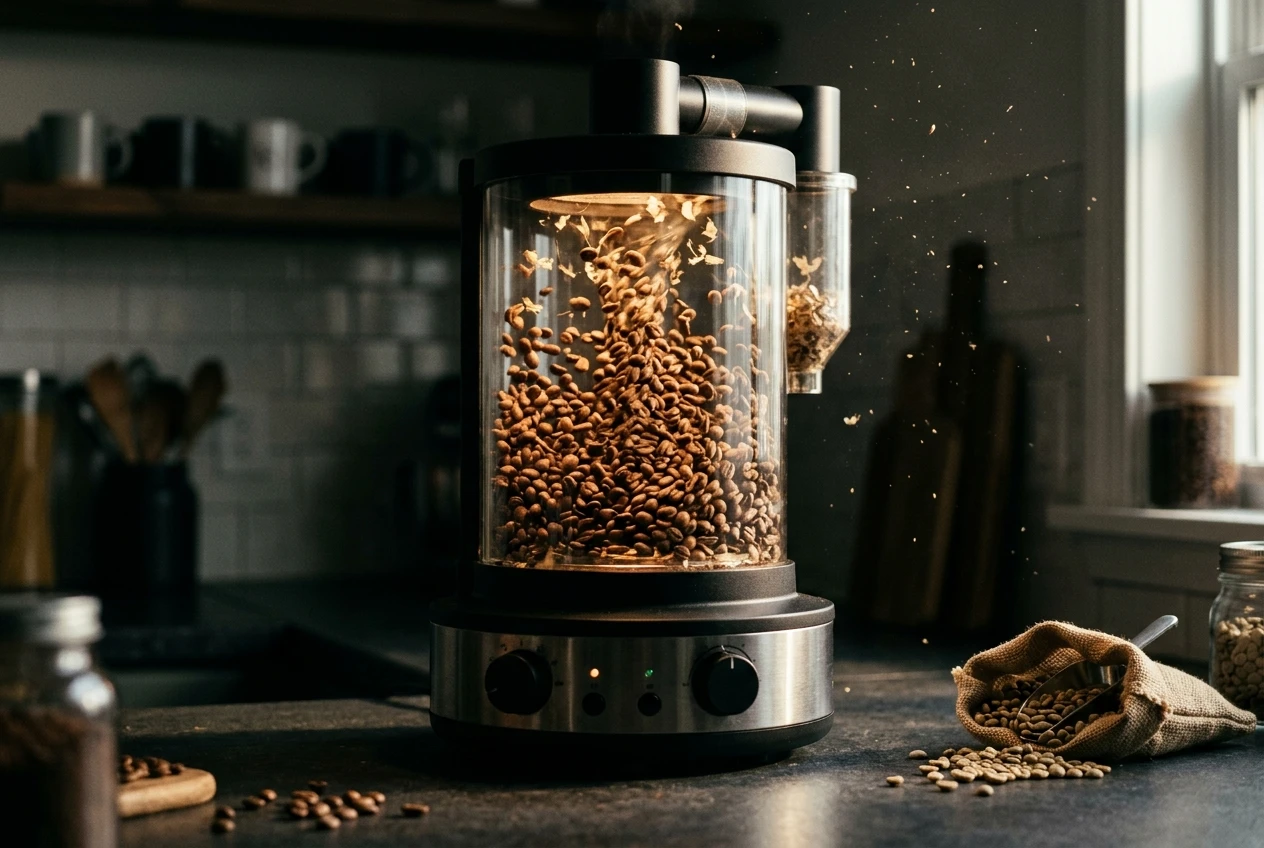
For a true beginner, this is the lowest-friction way to get a cup of coffee you actually enjoy drinking within the first week of owning the machine. The learning curve is short because the machine does most of the work: you set a time or a roast level, and the airflow does the rest. That makes air roasting a strong choice if your goal is simply to drink fresher, better coffee at home without turning it into a hobby that demands your attention.
The tradeoff is control. Because the roast moves fast and the variables you can adjust are limited, air roasters give you less room to shape the flavor of a specific bean. Serious roasters who want to chase a particular acidity or body in a Kenyan versus an Ethiopian bean often find air roasters frustrating once they know what they’re after, because the machine doesn’t let them slow down and intervene the way a drum does.
If you’re not sure whether you’ll care about that level of control six months from now, an air roaster is a reasonable place to start. It will not hold you back from drinking good coffee. It may hold you back from refining it.
Drum roasters: more setup and smoke, but the control that keeps serious roasters hooked
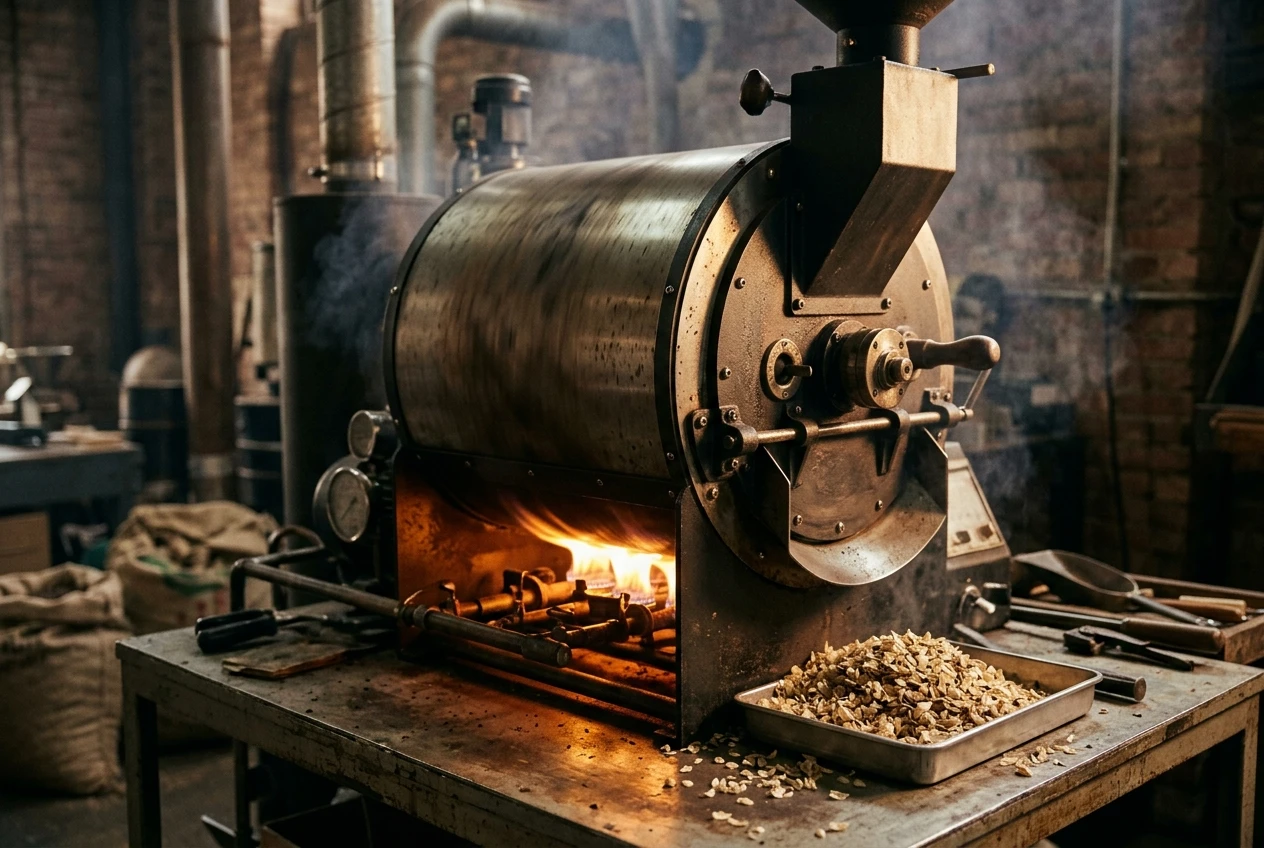
Drum roasters tumble the beans inside a rotating cylinder, heated either by a gas flame or an electric element underneath. The roast takes longer, often fifteen to twenty minutes, and that extra time is exactly what gives you control: you can adjust heat partway through, slow down or speed up development, and start to taste the difference your adjustments make from one roast to the next.
This is the method that turns roasting into a skill rather than a setting. People who stick with home roasting for years are almost always running drum roasters, because the slower pace rewards attention and experimentation in a way air roasting doesn’t. You learn to read the sound of first crack, watch the color change in stages, and make small decisions that compound into a noticeably different cup.
The cost of that control is setup and mess. Drum roasters produce more smoke than air roasters, partly because the longer roast time gives more of the bean’s oils and chaff time to burn off, and partly because many drum roasters vent less efficiently unless you add ducting. Chaff collection is also more hands-on. You’ll likely be cleaning a chaff collector and wiping down a nearby counter after most sessions, not just occasionally.
If you already suspect you want to go deep on this, a drum roaster is worth the extra setup from day one. If you’re still finding out whether roasting interests you at all, the smoke and cleanup can be enough to end the experiment before you’ve learned anything.
Popcorn poppers: the cheapest way to find out if roasting is for you before you spend real money
Before dedicated home roasters existed as a consumer category, people roasted coffee in hot-air popcorn poppers, and plenty still do. The appeal is obvious: if you already own one, or can find a secondhand air-style popper for very little, you can roast your first batch of coffee for next to nothing.
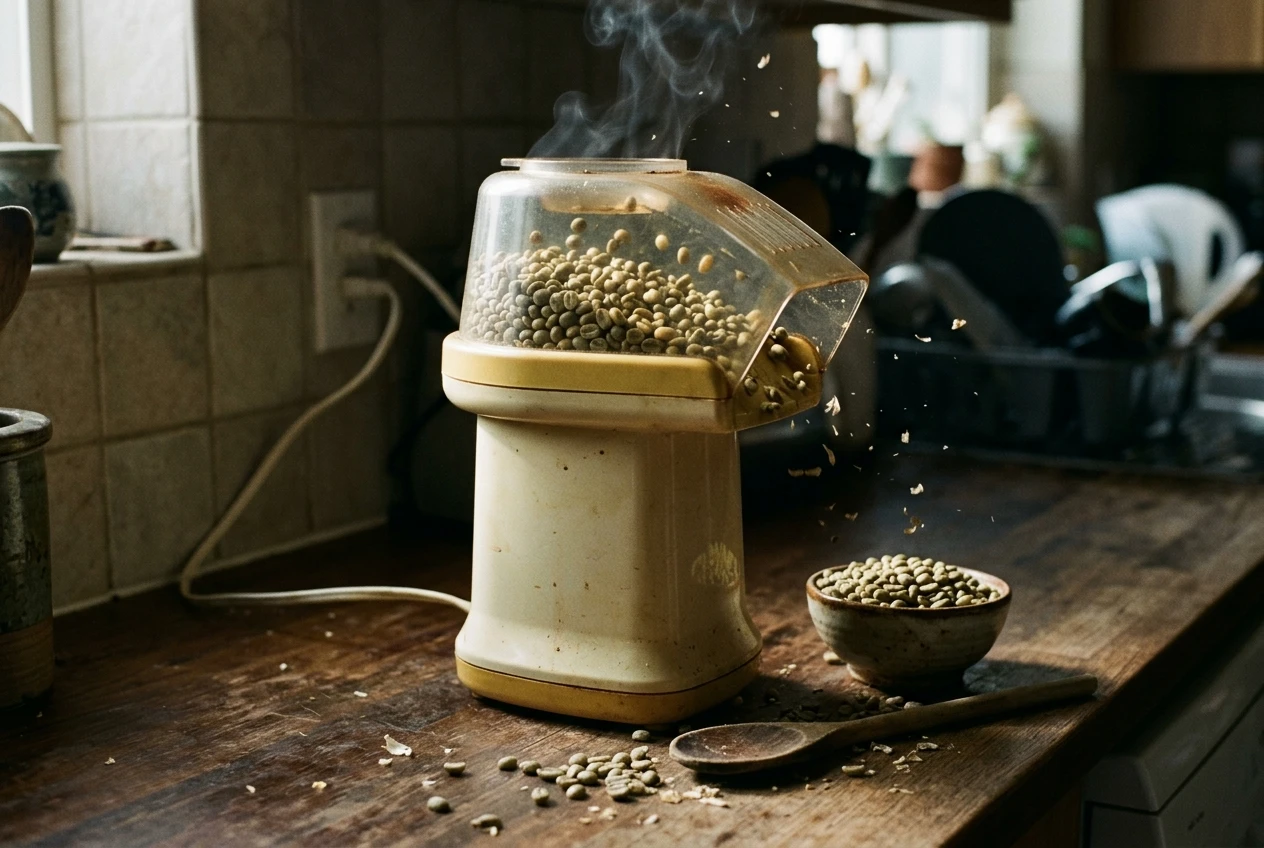
A popcorn popper works on the same basic principle as an air roaster, moving hot air through the beans, but without any of the roast controls, timers, or chaff management built into a purpose-made machine. You watch the color, you listen for cracks, and you decide by eye and ear when to stop. It’s crude, but it works well enough to produce a genuinely drinkable roast.
The value here isn’t the coffee quality, which will be inconsistent batch to batch. The value is finding out, for very little money, whether you enjoy the process at all before you commit to a $150 air roaster or a $500 drum roaster. If standing at the stove watching beans tumble and smelling the first wisps of smoke sounds tedious to you, better to learn that from a popcorn popper than from a machine you can’t easily resell.
The honest limit of this method is batch size and durability. Most poppers aren’t designed for the heat and duration coffee roasting demands, and they tend to wear out faster than they would popping actual popcorn. Treat a popcorn popper as a trial, not a long-term plan.
The smoke and noise question nobody mentions until it’s too late
Every roasting method produces smoke, and it surprises almost every first-time roaster how much. The smoke comes from the oils in the bean surfacing and burning as the roast progresses, and it gets noticeably stronger as beans move from a medium roast toward a dark one.
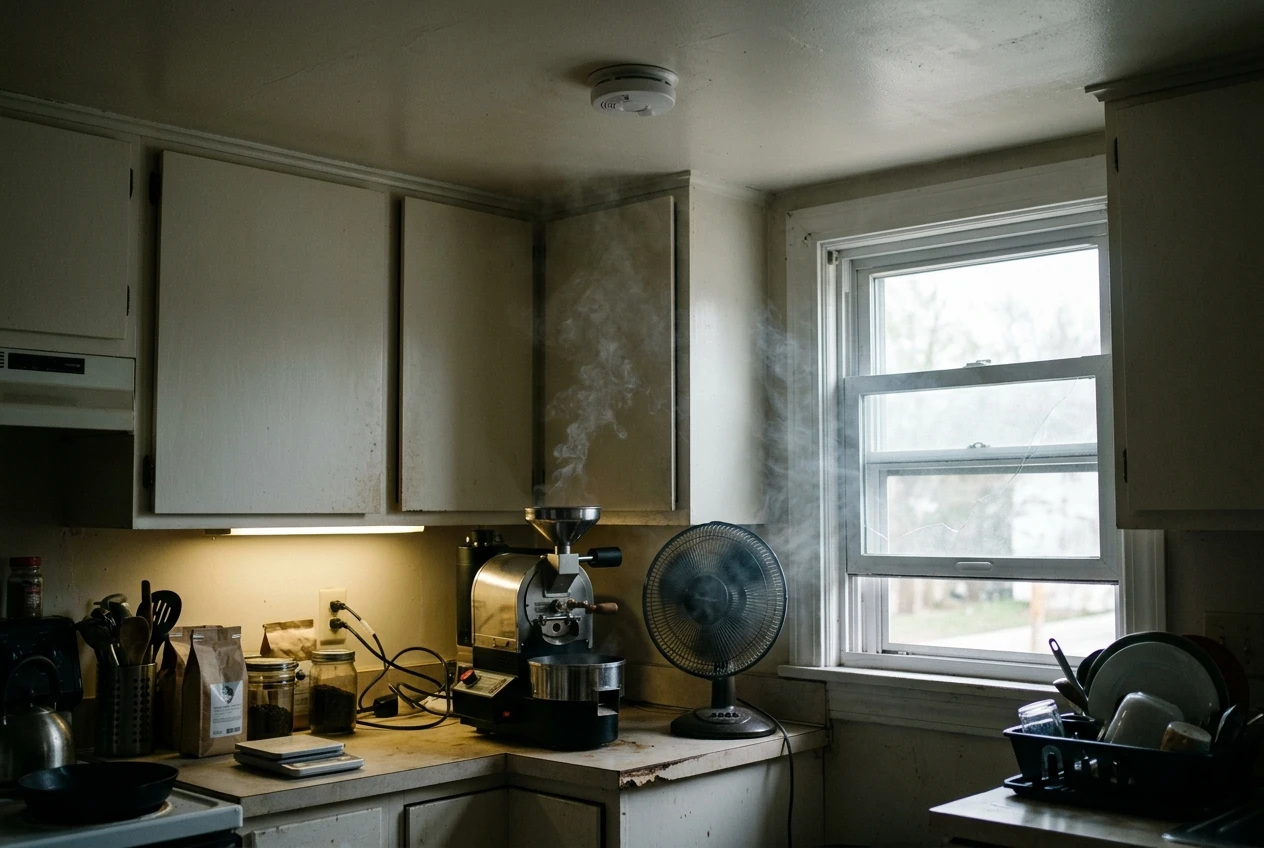
If you live somewhere with a sensitive smoke detector directly above your kitchen, or in an apartment where venting outside isn’t an option, this is worth sorting out before you buy anything. Air roasters tend to produce less smoke than drum roasters at an equivalent roast level, but “less” is not “none.” Roasting near an open window with a fan running is a common workaround, not a guarantee.
Noise matters too, and it’s rarely mentioned in product descriptions. Air roasters use a fan to move hot air, and that fan runs the whole time, producing a steady hum that some people find mild and others find genuinely hard to roast through at seven in the morning without waking the rest of the house. Drum roasters with a motor driving the rotation add their own mechanical noise on top of any fan.
Neither problem should stop you from roasting at home, but both are worth testing for yourself. If you can, roast a test batch at a friend’s house or at a local roasting meetup before you buy, so the smoke and the noise aren’t surprises you discover after the return window has closed.
How batch size decides whether you’ll outgrow your first roaster in a month
Most entry-level roasters, across all three methods, handle somewhere between 100 and 250 grams of green coffee per batch. That sounds like plenty until you do the math on how much roasted coffee that actually produces, and how fast you’ll go through it if you’re brewing daily.
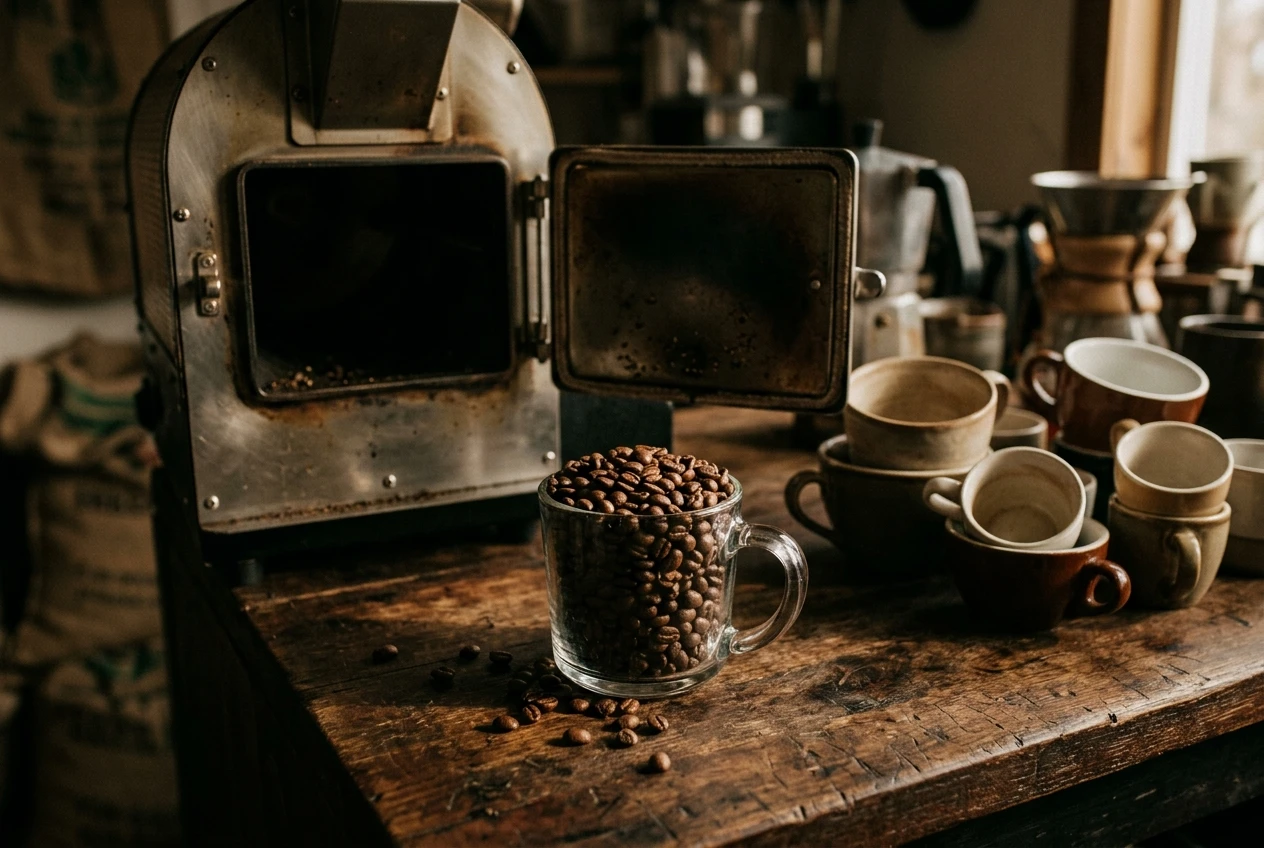
A small batch roaster that takes twelve to twenty minutes per roast, plus cooling time, might realistically produce enough coffee for three or four days of regular drinking. If you’re roasting for two people who both drink coffee daily, you could be running the roaster two or three times a week just to keep up, which is fine if you enjoy the process and frustrating if you don’t.
This is where a lot of beginners get the decision wrong in the opposite direction: they buy a roaster with a bigger batch size, assuming bigger is simply better, and then struggle to get consistent results because larger batches need more airflow or drum rotation to roast evenly. A roaster undersized for your household means more frequent roasting sessions. A roaster oversized for your skill level means uneven roasts while you’re still learning. Neither is a disaster, but it helps to know which problem you’re choosing.
Matching your roaster to how much coffee you actually drink each week
Before you buy anything, it helps to work out, honestly, how much coffee your household drinks in a week. Not how much you’d like to drink, or how much you imagine drinking once you’re “really into it,” but what you’re actually brewing right now.
If that number is modest, maybe one or two cups a day for one person, a smaller-batch air roaster or even a popcorn popper trial run will keep up without forcing you into roasting sessions more often than you want. If you’re brewing for a household of coffee drinkers, or if you already know you’ll want to batch-roast on weekends to have coffee ready all week, that points toward a drum roaster or an air roaster with a larger batch capacity from the start.
There’s no need to get this perfectly right on the first purchase. Roasting equipment holds its resale value reasonably well precisely because so many beginners go through this same trial-and-adjustment process. What matters more is starting with a method that matches your patience and your tolerance for smoke, so the first few months teach you something useful instead of souring you on home roasting altogether.
Still weighing how roasting fits into your coffee habit overall? The About page lays out the bigger picture.