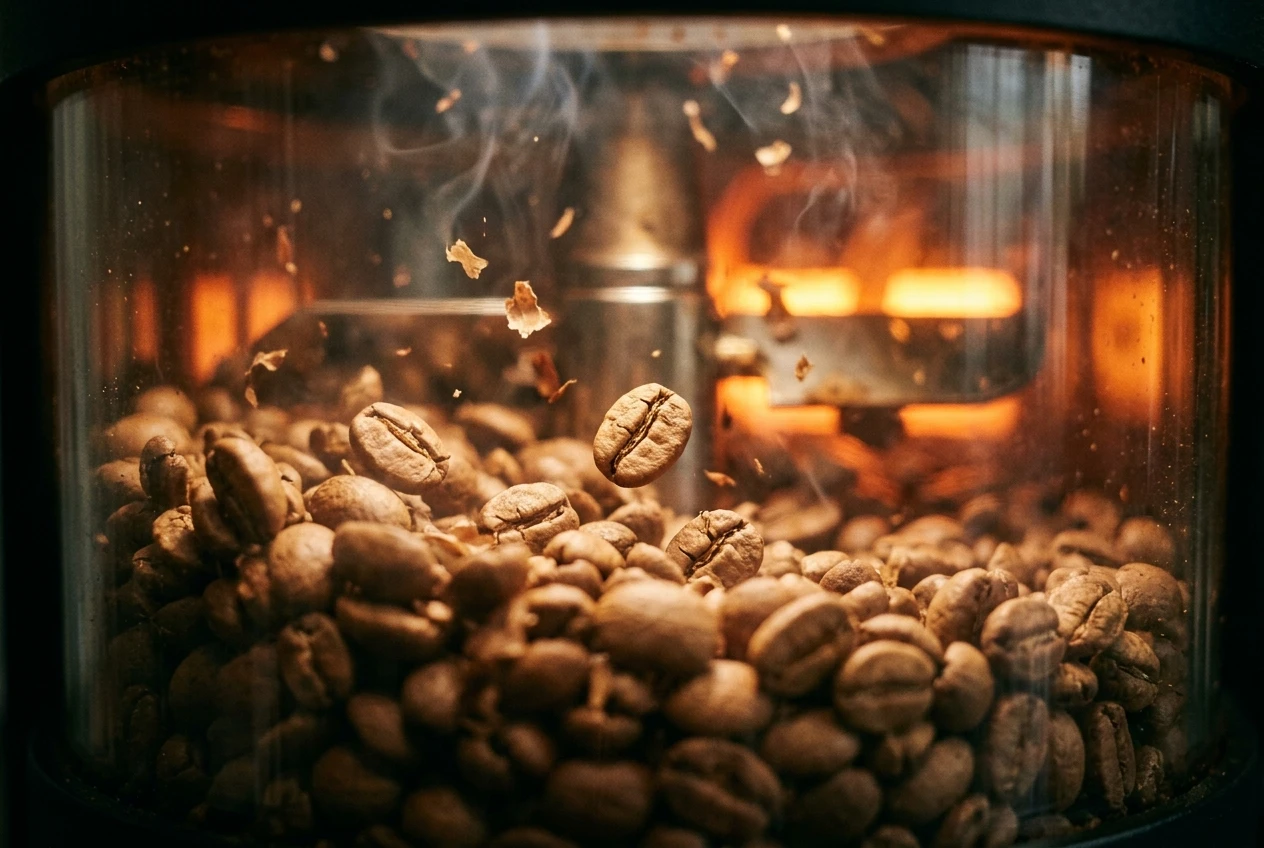
The sound gets compared to popcorn so often that new roasters walk into their first batch expecting popcorn and get confused when what they hear doesn’t quite match. Popcorn pops are fat and wet, a kernel bursting open all at once. First crack is drier and sharper, closer to a knuckle cracking or a twig snapping underfoot. It has a brittle edge that popcorn doesn’t have, because what’s rupturing inside the bean isn’t moist starch, it’s a rigid cell structure under pressure. The popcorn comparison gets you in the right neighborhood. It doesn’t get you to the house.
The best way to describe it might be this: if popcorn is a pop, first crack is a crack, with a short, percussive snap that ends almost as soon as it starts. One bean cracking sounds like a single knuckle. A roaster full of beans cracking sounds like gravel underfoot, or like a light rain just starting to hit a window. That layered, scattered quality, not one clean event but dozens of small ones overlapping, is a big part of what separates it from the sounds that come later in the roast.
What’s actually happening inside the bean when it cracks
Green coffee beans hold a measurable amount of moisture, and as the bean heats up, that moisture turns to steam. Steam needs room, and the bean’s internal structure, mostly rigid plant cell walls, doesn’t have much to give. Pressure builds inside the bean until the structure gives way and the steam escapes, usually splitting the bean along or near its center seam.
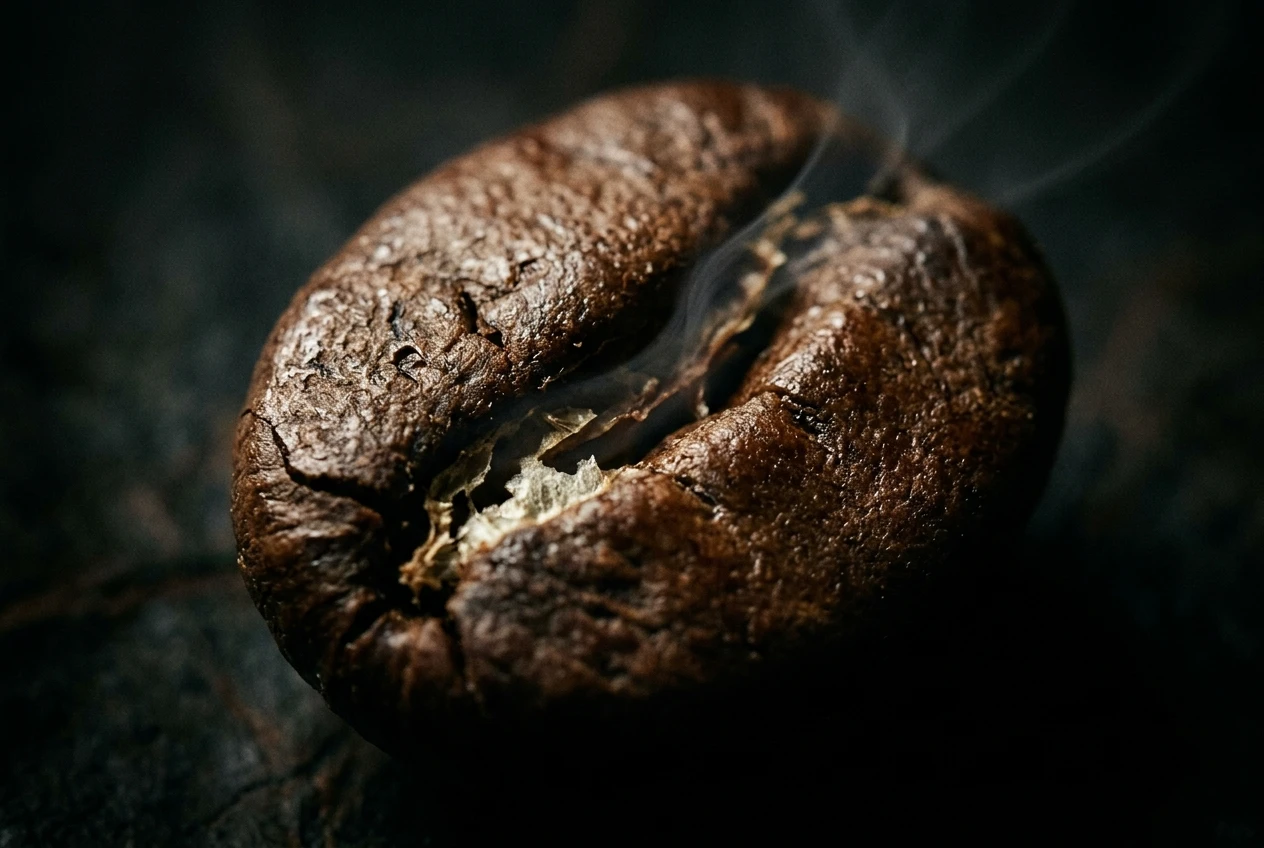
That’s the crack. It’s a small structural failure caused by internal steam pressure, not a chemical reaction and not caramelization, though both of those are happening around the same time. The sound is the bean’s cell walls physically breaking. That’s why it’s sharp and dry rather than soft and wet: you’re hearing a fracture, not a burst.
This also explains why first crack doesn’t arrive as one event across a batch of beans. Every bean in your roaster has slightly different density, moisture content, and size, so every bean reaches its breaking point at a slightly different moment. That’s the gravel-on-a-window effect. It’s not one crack, it’s a hundred small ones spread across a minute or two.
The three seconds before first crack: smell and color cues that warn you it’s coming
Your ears aren’t the only sense worth training here, and in practice they usually aren’t even the first one to fire. In the minute or so leading up to first crack, the smell coming off the roaster shifts from grassy and vegetal to something closer to toast, baking bread, or roasted nuts. That shift in smell tends to show up before the sound does, which is why experienced roasters often say they can smell first crack coming before they hear it.
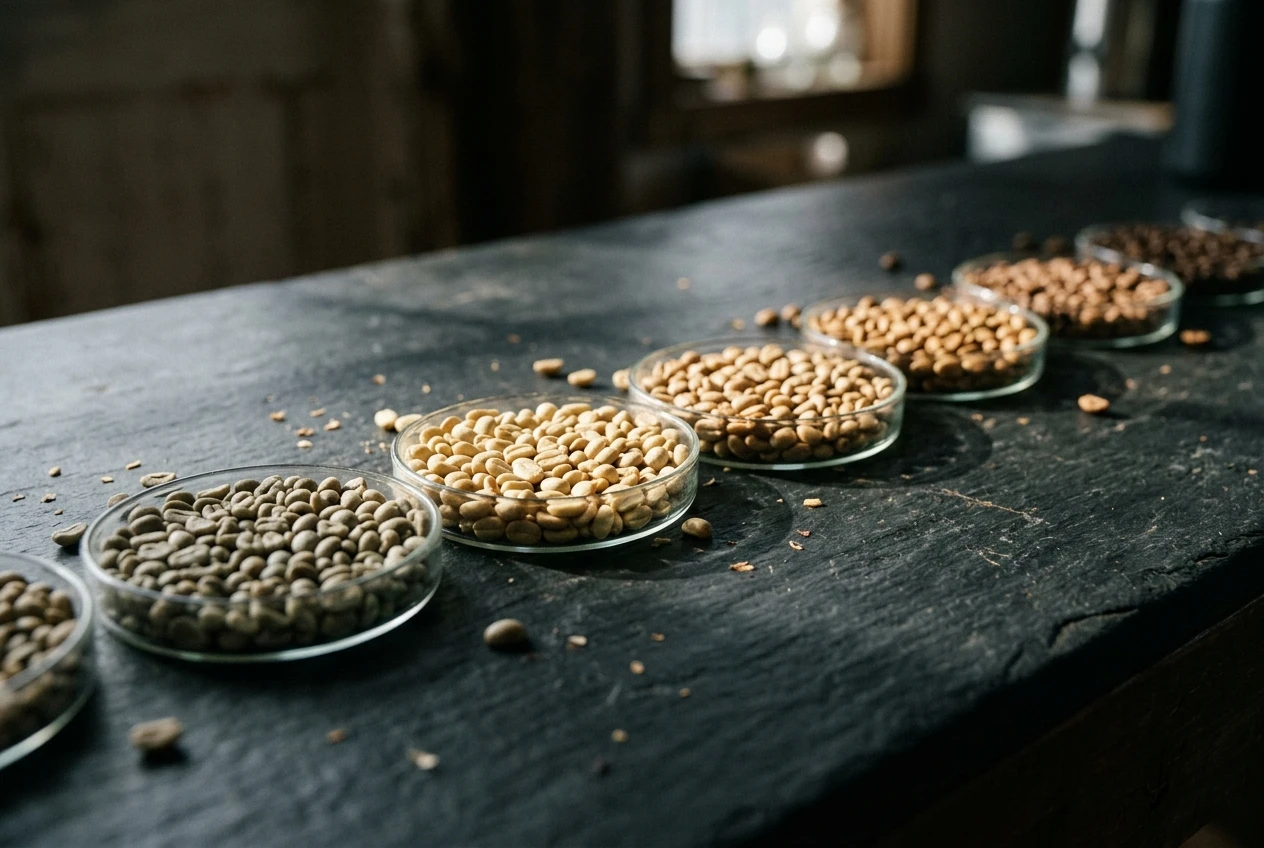
Color is doing the same thing on a slower clock. Beans move from green to a pale, uneven yellow, then into light tan and cinnamon shades as the sugars on the surface start to brown. By the time you’re seeing a fairly even light brown across the batch, you’re usually seconds away from the first pop. If you’re watching through a window on a drum roaster or glancing into an air roaster’s chamber, color and smell together give you a countdown that the sound alone won’t.
None of this is a substitute for the sound, but it’s worth paying attention to, because it means you’re never relying on your ears alone. If you can smell toast and see light brown and you haven’t heard a crack yet, you’re close. That’s useful information when you’re trying to decide whether to lower heat or just wait another ten seconds.
Single pops versus rolling crack: when first crack actually starts
This is where a lot of new roasters misjudge the timing. The very first pop you hear isn’t “first crack starting” in the sense that matters for your roast log. It’s the first bean in the batch to reach its breaking point, and it can be followed by ten or fifteen seconds of near silence before the next one goes.
What roasters usually mean when they log “first crack” is the point where the pops stop being isolated and start overlapping, several beans cracking close enough together that you can’t cleanly separate one pop from the next. That’s rolling crack, and it’s the marker worth writing down, not the lonely first pop that shows up early and then goes quiet.
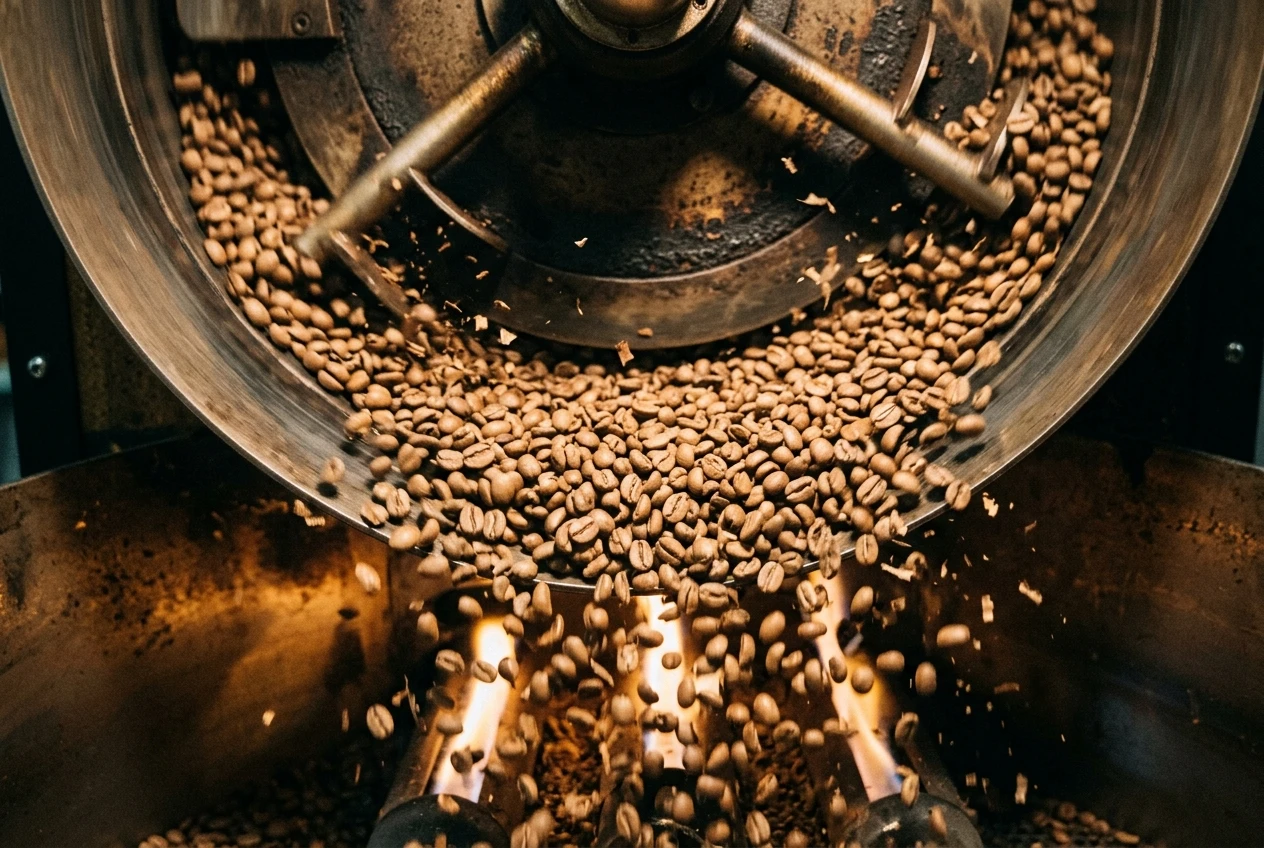
If you mark your roast log at the first isolated pop, you’ll consistently log first crack too early, and your development time calculations will be off because you’re measuring from the wrong starting line. Wait for the rolling sound, the gravel, before you call it.
The silence after: why it’s not over when it sounds over
Rolling first crack builds, peaks, and then tapers off, and the tapering can be deceptive. The pops get further apart again, and there can be a stretch of near quiet that sounds like the end. Many new roasters hear that quiet and assume first crack is finished, when really it’s just thinning out before a few last stragglers go.
A useful habit is to wait a clear ten to fifteen seconds of true silence, no pops at all, before you consider first crack complete. Beans that are slightly larger, slightly denser, or sitting in a cooler part of the drum can crack well after the main rolling sound has died down. If you cut your timing the moment things go quiet, you risk ending first crack measurement before the batch has actually finished it.
Mistaking rolling first crack for second crack (and the reverse)
Second crack sounds different enough once you know what to listen for, but new roasters often confuse the two, in both directions. Second crack is quieter and higher pitched than first crack, closer to the snap of dry twigs or the crackle of a fire burning low than to the heavier, wetter-sounding pops of first crack. It also tends to arrive as a steadier, more continuous crackle rather than the scattered gravel pattern of first crack rolling.
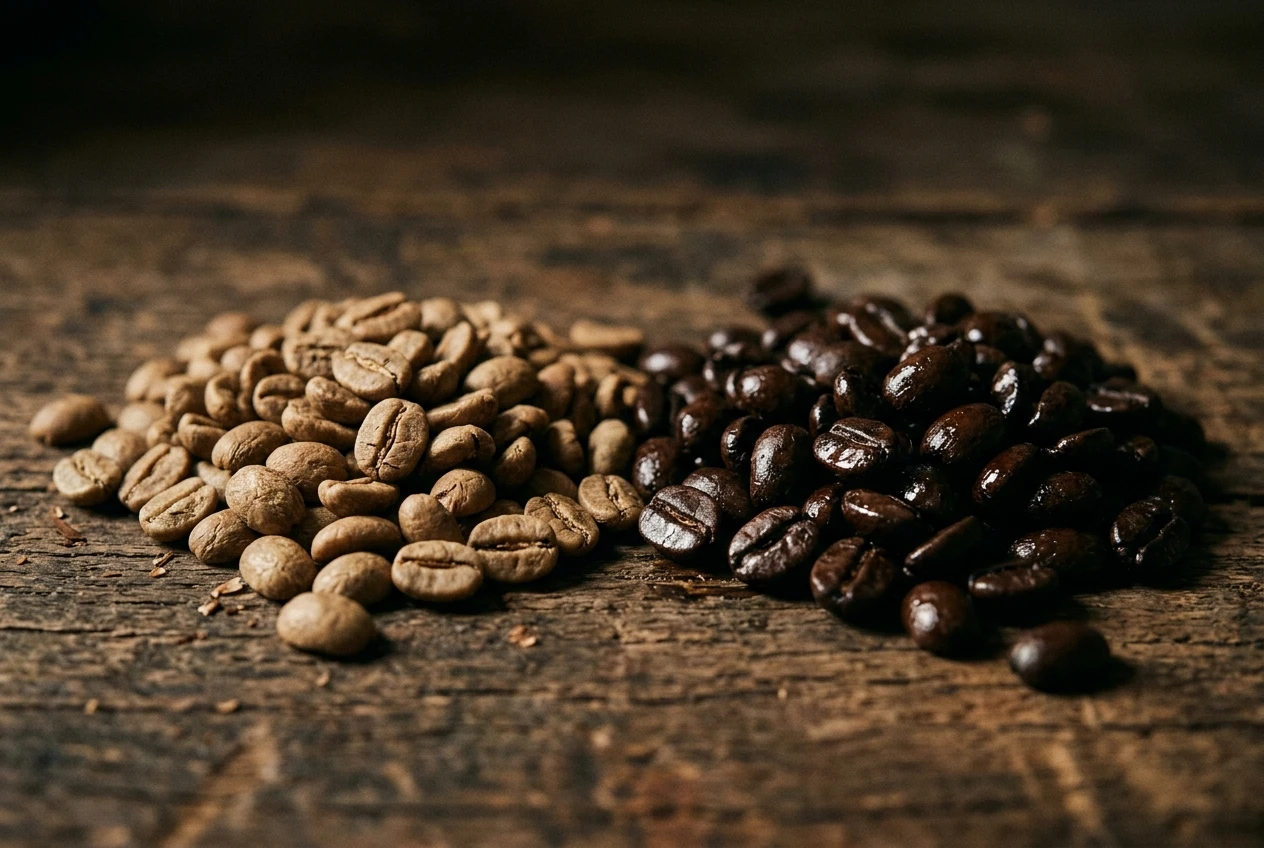
The confusion runs two ways. Some new roasters hear a particularly dense, overlapping stretch of first crack and think they’ve jumped straight to second, and pull the roast far too light. Others hear the thinner, quieter pops near the start of second crack and assume first crack is just restarting, letting the roast run dangerously dark before they catch it.
The smell is often the better tiebreaker when the sound is ambiguous. First crack smells like toast and baked bread. Second crack smells sharper and smokier, closer to burnt sugar, and by that point you’ll usually see oil starting to show on the bean surface. If you’re not sure which crack you’re hearing, check for oil and check the smell before you trust your ears alone.
What to do the moment you hear it, bean by bean
Once you’ve confirmed rolling first crack, you’re in the development stage of the roast, the window where you decide how far past first crack to push the beans before cooling them. For beans headed toward a lighter roast, that window might mean pulling the beans within a minute or so of rolling crack starting. For a darker cup, you’ll let more time pass, possibly through the beginning of second crack.
What matters most in this moment is that you log the time rolling crack started, keep watching color, and keep your nose in the game alongside your ears. Decisions here are easier if you already have a target roast level in mind before the roast starts, rather than deciding on the fly once you hear the first pop.
Building your ear: a simple drill for your next five roasts
The fastest way to get reliable at this is repetition with notes, not more reading. For your next five roasts, keep a notebook next to the roaster and write down three things each time: the time you heard the first isolated pop, the time rolling crack started, and the time the pops stopped for good. Add a word or two about smell at each point.
After five roasts, read back through your notes. You’ll likely notice your own early pattern, how long the gap usually runs between that first lonely pop and the real rolling start, and how consistent your batches are. That pattern is specific to your roaster, your batch size, and your heat settings, which is exactly why it’s worth building from your own notes rather than someone else’s numbers.
If you’re still deciding which roaster to learn this on, see Air, Drum, or Popcorn: How to Pick Your First Home Roaster, or start from the basics in How To Roast Coffee Beans At Home: The Beginner’s Guide.