You roasted a batch two weeks ago that tasted incredible. Bright, sweet, no bitterness, the kind of cup that made you want to text someone about it. You’ve tried to get back to that cup three times since, and every attempt has landed somewhere else: a little flat, a little scorched, a little nothing-special. The problem isn’t your palate and it isn’t bad luck. It’s that nothing from that great roast got written down, so you have no idea what you actually did right.
This is the single biggest reason home roasters plateau. They roast by feel, by sound, by a rough sense of color, and when something works they have no record to pull it back out of. A roast log fixes that. It’s not complicated and it doesn’t take long to fill in, but it’s the difference between every roast being a fresh guess and every roast building on the last one.
Why your last great roast was probably an accident
Think about everything that changes between two roasts of the “same” coffee: the bean’s moisture content shifts as it sits in the bag, the ambient temperature in your garage or kitchen changes with the season, your charge temperature drifts a few degrees depending on how long the roaster sat idle, and your attention to first crack varies because you got distracted by the dog or a phone call. Any one of those is enough to move the final cup. Stack two or three together and you get a roast that tastes nothing like the one before it.
A great roast without a log is just a coincidence that happened once. You can’t repeat a coincidence. You can only repeat a process, and a process only exists if you can look back and see exactly what you did. That’s the whole case for a log: it turns “that one time it was amazing” into “here’s what I do every time.”
The six numbers worth writing down every single time
You don’t need a roasting journal with twenty fields. Most of them you’ll abandon after a week because they take too long to fill in. Stick to six things, every batch, no exceptions:
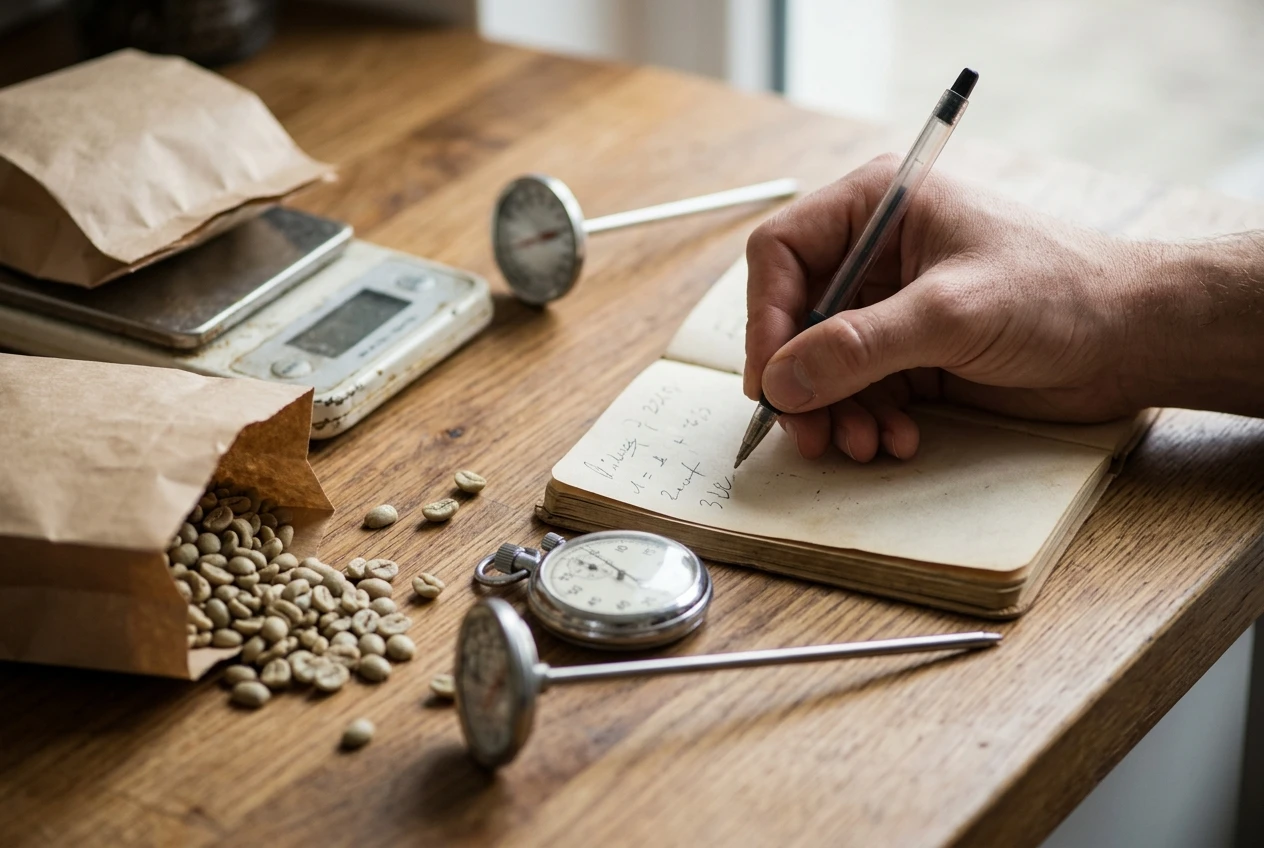
- Bean: origin, variety if you know it, and how long it’s been since the green coffee arrived. A bean that’s been sitting for two months roasts differently than one fresh off the truck.
- Charge temperature: the temperature of your roaster (or the air, for some poppers) the moment you load the beans.
- Time to first crack: how many minutes from charge until you hear that first pop.
- Drop time: total time from charge to when the beans come out, plus how far past first crack you let it run.
- Cooling time: how long it took to get the beans down to room temperature, and how you cooled them (fan, tray, colander).
- Tasting notes: written at least 24 hours after roasting, never the same day. Fresh-roasted coffee tastes different once it’s degassed, so a same-day cup will mislead you.
That’s it. Six data points, maybe thirty seconds of writing per roast. The payoff is that after a handful of batches you can lay them side by side and see exactly what separated the good one from the average one.
Paper notebook, spreadsheet, or app: picking what you’ll actually keep using
The best log format is the one you’ll still be using in a month. A beautiful spreadsheet with conditional formatting that you abandon after three entries is worse than a cheap notebook you actually fill in every time.
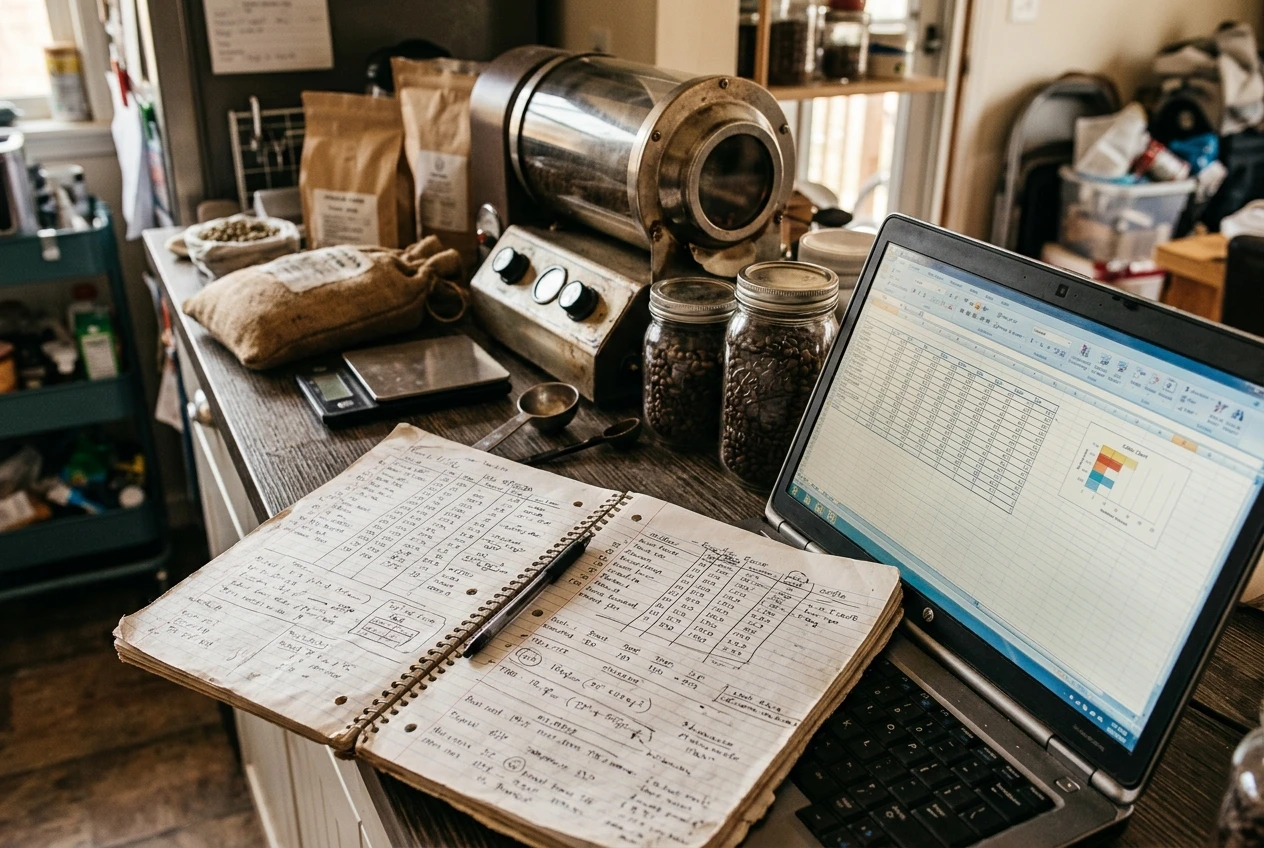
A paper notebook kept next to the roaster works well because there’s zero friction. You’re standing there with a timer in one hand anyway; jotting four numbers on a page takes seconds. The downside is it’s hard to search later, and if you want to compare five roasts of the same bean you’ll be flipping pages.
A spreadsheet solves the comparison problem. One row per roast, six columns, and you can sort or filter by bean, by drop time, by whatever you want to check. It takes a few more seconds per entry than paper, but if you’re the kind of person who likes to see patterns laid out in a grid, it’s worth the extra effort.
A roasting app will do some of this automatically, especially if your roaster connects to one, logging temperature curves in real time. That’s genuinely useful if your equipment supports it, but don’t let the absence of an app stop you from starting. A $2 notebook does the same job for the first few months while you’re figuring out what matters to you.
Whatever you pick, the rule is the same: fill it in the moment the roast happens, not from memory an hour later. Memory smooths out the details you need most.
Reading first crack and knowing when to mark it
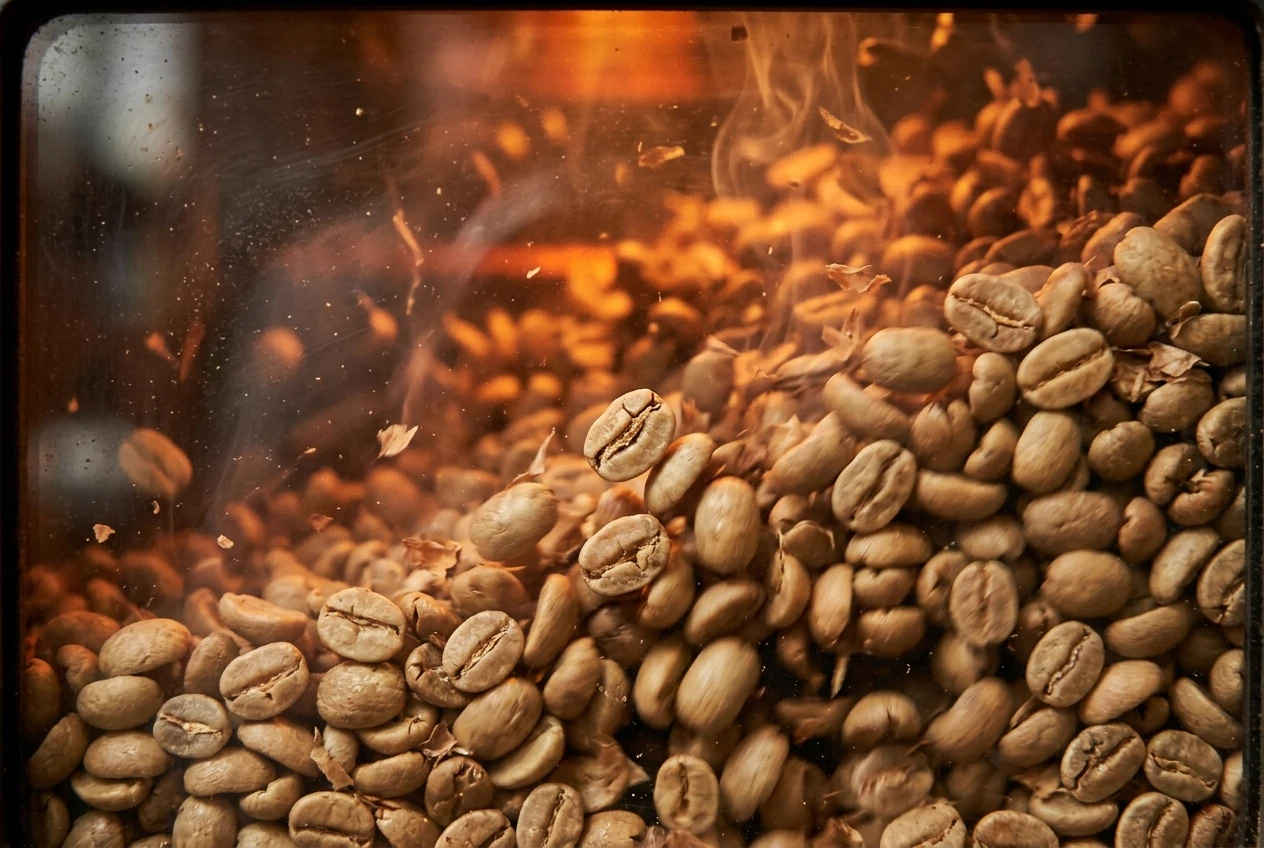
First crack is the hinge point of your whole roast, and it’s also the easiest entry to get wrong if you’re not sure what you’re listening for. It sounds less like a single crack and more like popcorn starting up: a scattered pop here, then another, building into a steadier run over thirty seconds to a minute. If you’ve never roasted enough to recognize it confidently yet, it helps to know what first crack actually sounds like before you’re relying on your ear alone mid-roast.
For logging purposes, mark the moment you hear the first individual pop, not when it’s in full swing. That’s your reference point. Everything downstream, how far past first crack you drop, how long the development time runs, gets measured from that moment. If you log “first crack” inconsistently, sometimes the first pop, sometimes once it’s rolling, your drop times will look erratic even when your actual roasting was consistent. Pick one definition and use it every time.
Turning three weeks of logs into a roast profile you can repeat
After roughly three weeks of regular roasting, you’ll have enough entries to stop guessing and start comparing. Pull out every log for the same bean and line up the charge temperature, time to first crack, and drop time next to the tasting notes. One pattern will usually jump out fast: the batches you rated highest cluster around a specific window, maybe first crack landing around the same minute mark, maybe a drop time that’s consistently fifteen seconds shorter than your other attempts.
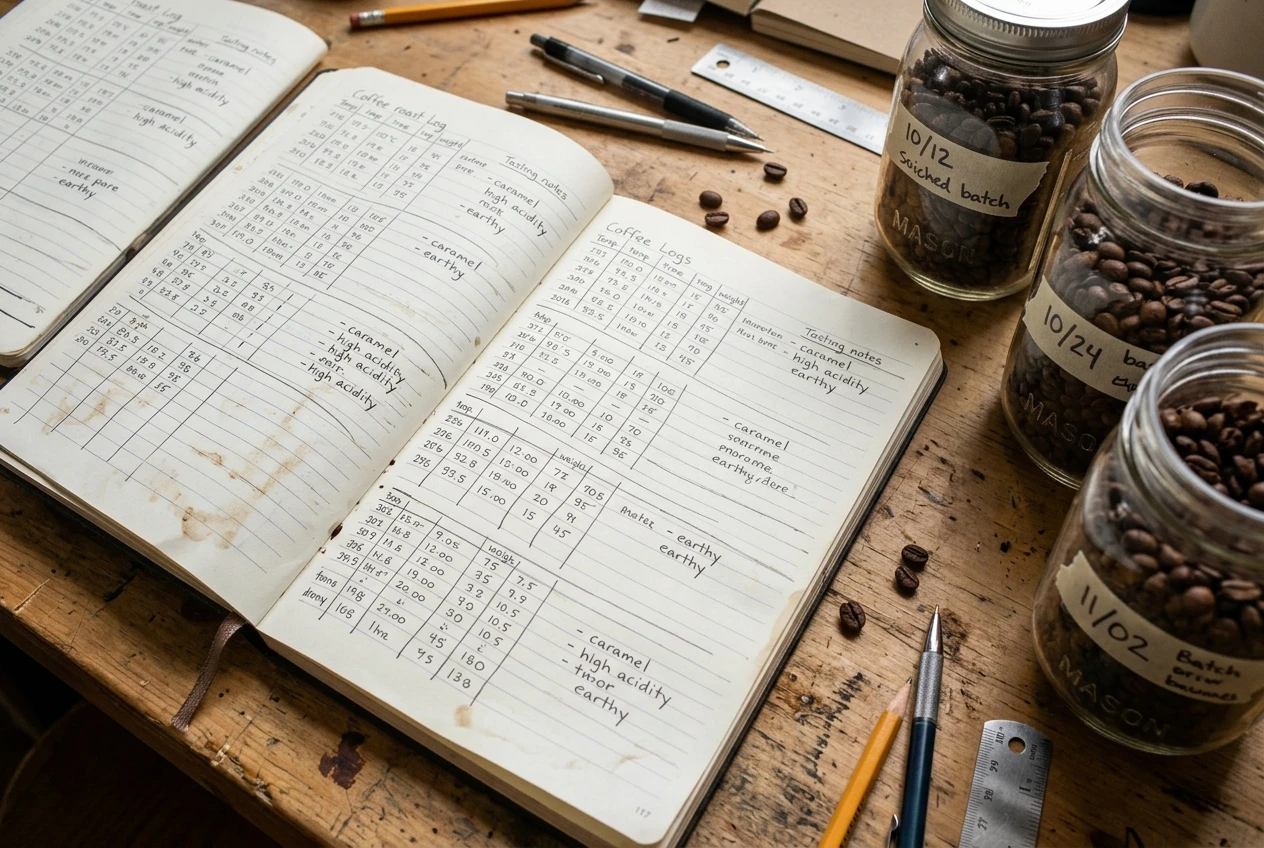
That cluster is your profile. Not a guess, not a vibe, an actual recipe built from your own results: this bean, this charge temp, first crack by this time, drop by this time. The next time you roast that bean, you’re not improvising. You’re running the profile and checking whether this batch matches it. If it doesn’t match and the cup tastes off, you immediately know where to look instead of wondering what went wrong across six different variables.
This is also where the log pays for itself on beans you buy repeatedly. If you’ve found a reliable source through our guide on where to buy green coffee beans for home roasting, you can build a profile once per origin and reuse it every time that bean comes back into rotation.
Spotting patterns: what your log tells you before your taste buds do
A log doesn’t just help you repeat a good roast, it helps you catch a bad one coming before you’ve even tasted it. Once you’ve got a few weeks of entries, you’ll start noticing things your mouth alone wouldn’t tell you:
- A bean that keeps needing two extra minutes to hit first crack compared to when you bought it, a clear sign it’s drying out and will roast faster from here on.
- A charge temperature that’s crept up over several roasts because you’ve been loading beans into a roaster that hasn’t fully cooled, which pushes your whole curve earlier without you intending it.
- A string of roasts where longer post-first-crack development consistently scores higher in your tasting notes, telling you your palate on this bean actually prefers more body over brightness.
None of these show up in a single cup. They show up in the log, over time, as a trend. Your taste buds tell you a roast is good or bad after the fact. Your log tells you why, and it tells you earlier than you’d catch it otherwise.
Building your log from day one with a new roaster
If you’re brand new to roasting, the temptation is to wait until you “know what you’re doing” before you start logging seriously. Do the opposite. Start the log on your very first batch, even if every number is a mess and every tasting note just says “smoky, not sure why.” Those early entries are still data. They’re the baseline you’ll compare everything else against, and they’ll show you how fast you’re actually improving, which is motivating in a way that memory alone never is.
If you walk through our beginner’s guide to roasting coffee at home, keep the log open next to you the whole time. Log the first roast exactly like you’ll log the hundredth. The habit matters more than the precision at the start, and the precision will come naturally once the habit is already in place.
If you’re still picking out your first roaster, check out our guide on choosing between air, drum, or popcorn roasters before you start your log.