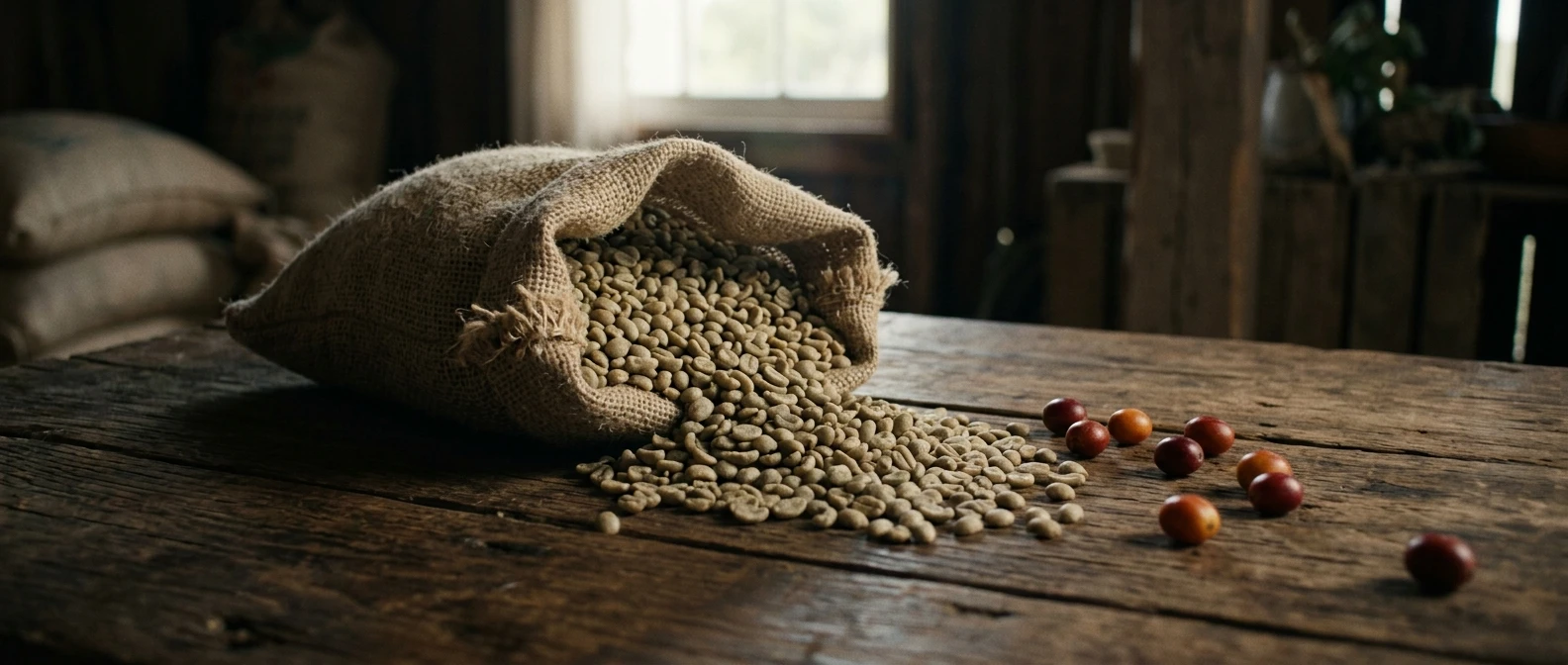
Grocery store coffee and green coffee are not the same product with a different label. Green coffee is the raw, unroasted seed of the coffee cherry, still pale and dense and smelling faintly of grass or hay rather than coffee. Every bag of roasted coffee you have ever bought started as green coffee that someone else roasted, and when you buy green instead, you are buying the ingredient rather than the finished product. That is the whole point of home roasting: you choose the beans, and you choose how dark or light they end up.
This matters for sourcing because green coffee is sold through a completely different set of channels than roasted coffee. You will not find it on a regular supermarket shelf, and most cafes do not stock it at all. Finding a reliable first source is its own small skill, separate from picking a roaster or learning the roast itself, and it is worth getting right before you spend money on either of those other things.
Online green coffee retailers built for home roasters
The easiest and most consistent place to start is an online retailer that sells specifically to home roasters, not to commercial roasting operations. These sellers are used to shipping small quantities, usually starting around a pound or two, and they write their listings with a home roaster’s questions in mind: origin, processing, altitude, crop year, and tasting notes.
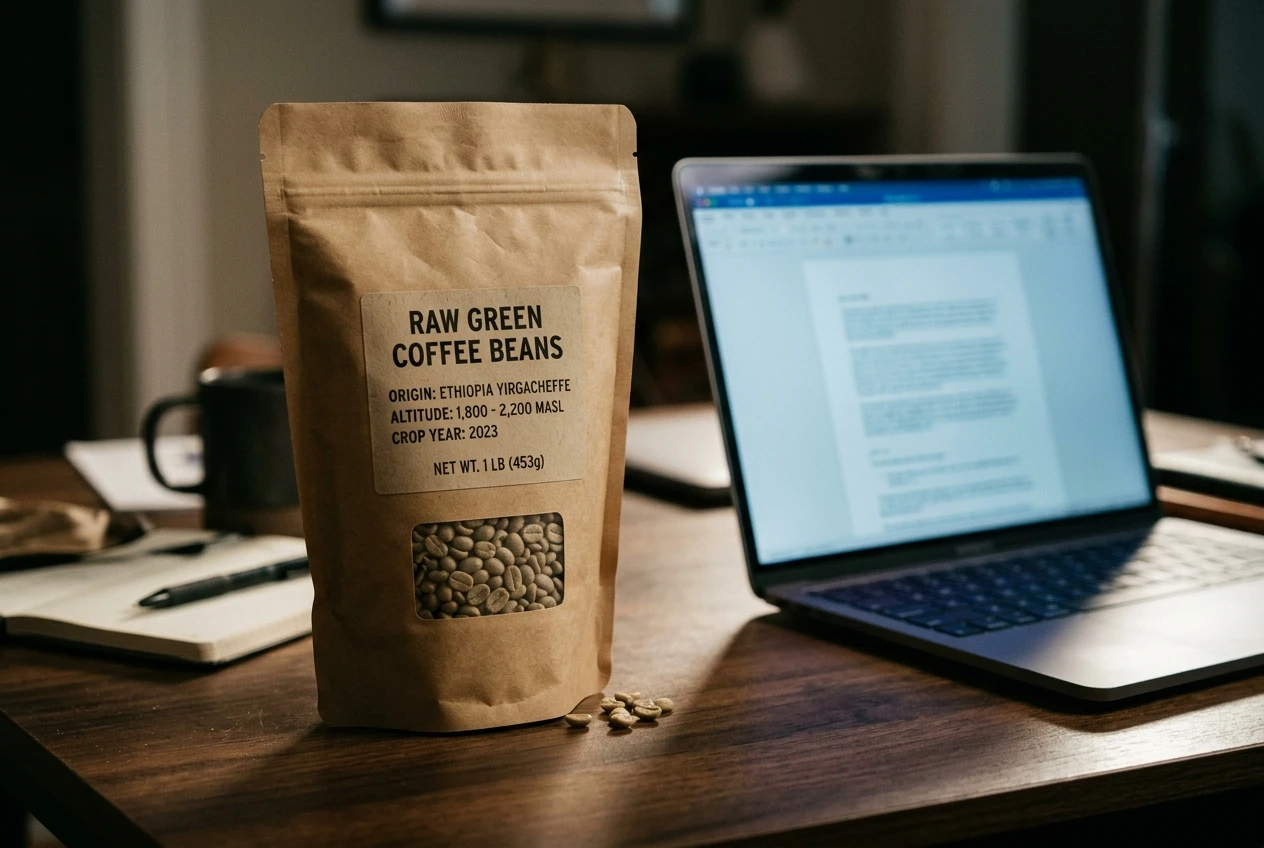
A few things to look for when you’re choosing between them:
- Clear crop year and harvest date on every listing, not just “fresh.”
- Small minimum order sizes, so you’re not stuck buying 20 pounds of a bean you’ve never roasted.
- Reviews or ratings from other home roasters, not just general star counts.
- A returns or complaint policy that actually says something, rather than a blanket “all sales final.”
Search engines will turn up a handful of established names quickly once you look for “green coffee for home roasters,” and most of them have been shipping to hobbyists for years. Price per pound varies a fair amount by origin and processing method, so don’t assume the cheapest listing is the best deal, and don’t assume the most expensive one is automatically higher quality either. Read the listing itself before you decide.
Buying from local roasteries, co-ops, and cupping groups
Online retailers are the most dependable option for a first order, but they are not the only one, and local sources are worth checking too. Some local roasteries sell green beans directly, either because they buy in larger lots than they roast through, or because they want to support the home roasting community around them. A quick phone call or visit is usually enough to find out.
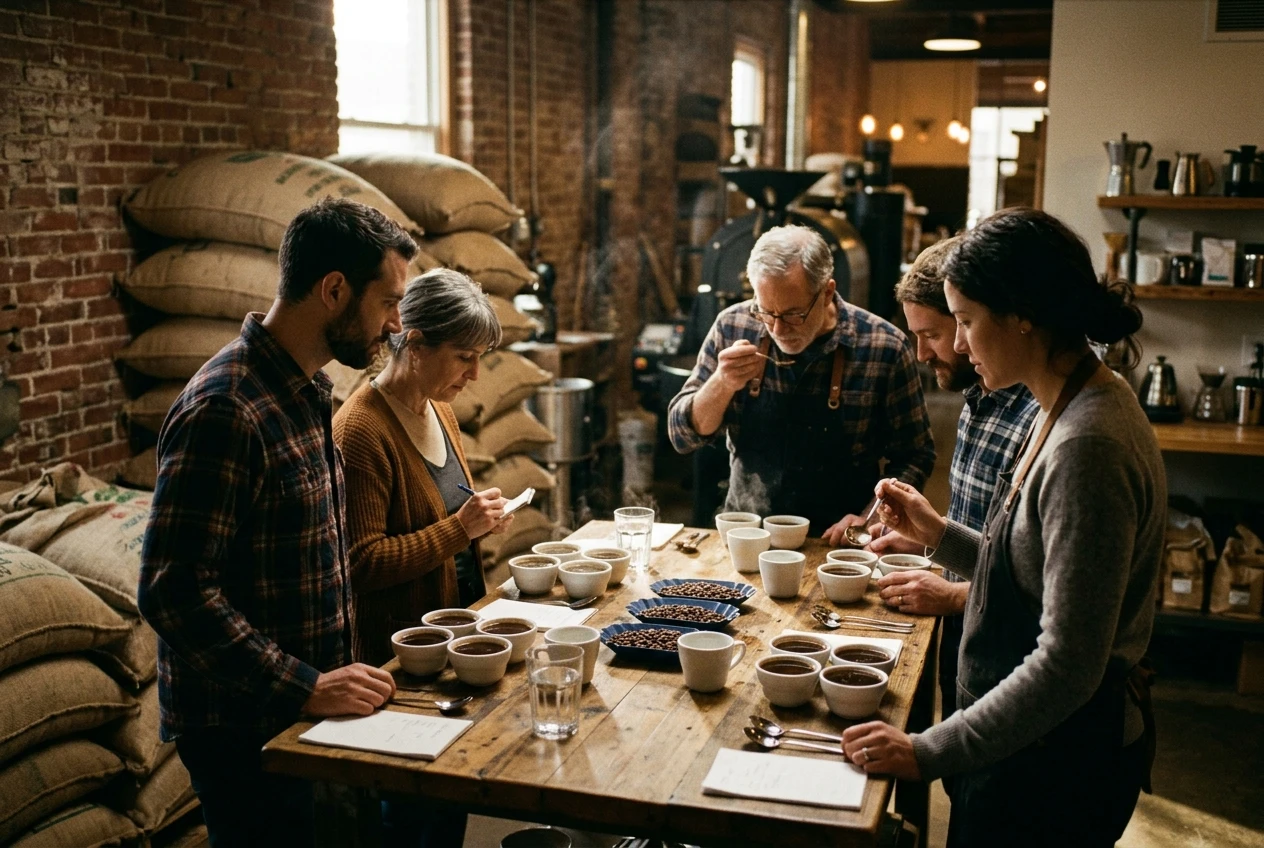
Cupping groups and local coffee clubs are another route, and they come with a bonus: the people in them have usually already roasted the exact lot you’re looking at, and they can tell you what it tasted like. If there’s a coffee roasting meetup or a cupping group near you, it’s worth showing up even before your first roast, just to ask questions and see what people are buying.
Buying clubs that split large sacks of green coffee between several home roasters are common in some areas too. They let you buy a smaller portion of a 60kg or 70kg bag at a better price per pound than a small retail bag would cost, though you’ll usually need to coordinate with other members on timing and pickup.
Reading a listing: crop year, processing method, and grading explained
Once you’ve found a seller, the listing itself tells you most of what you need to know, as long as you know what to look for.
Crop year tells you when the coffee was harvested. Green coffee doesn’t go bad the way roasted coffee does, but it does lose moisture and flavor potential over time. A current crop year, or the most recent one, is what you want for a first order. Anything more than a year or two old should be priced accordingly and treated with some caution.
Processing method describes how the fruit was removed from the bean before drying. The three you’ll see most often are washed, natural, and honey. Washed beans tend to taste cleaner and brighter, natural beans tend to taste fruitier and heavier, and honey-processed beans usually sit somewhere between the two. None of these is objectively better, but the processing method has a real effect on how the bean roasts and how it tastes, so it’s worth knowing which one you’re buying.
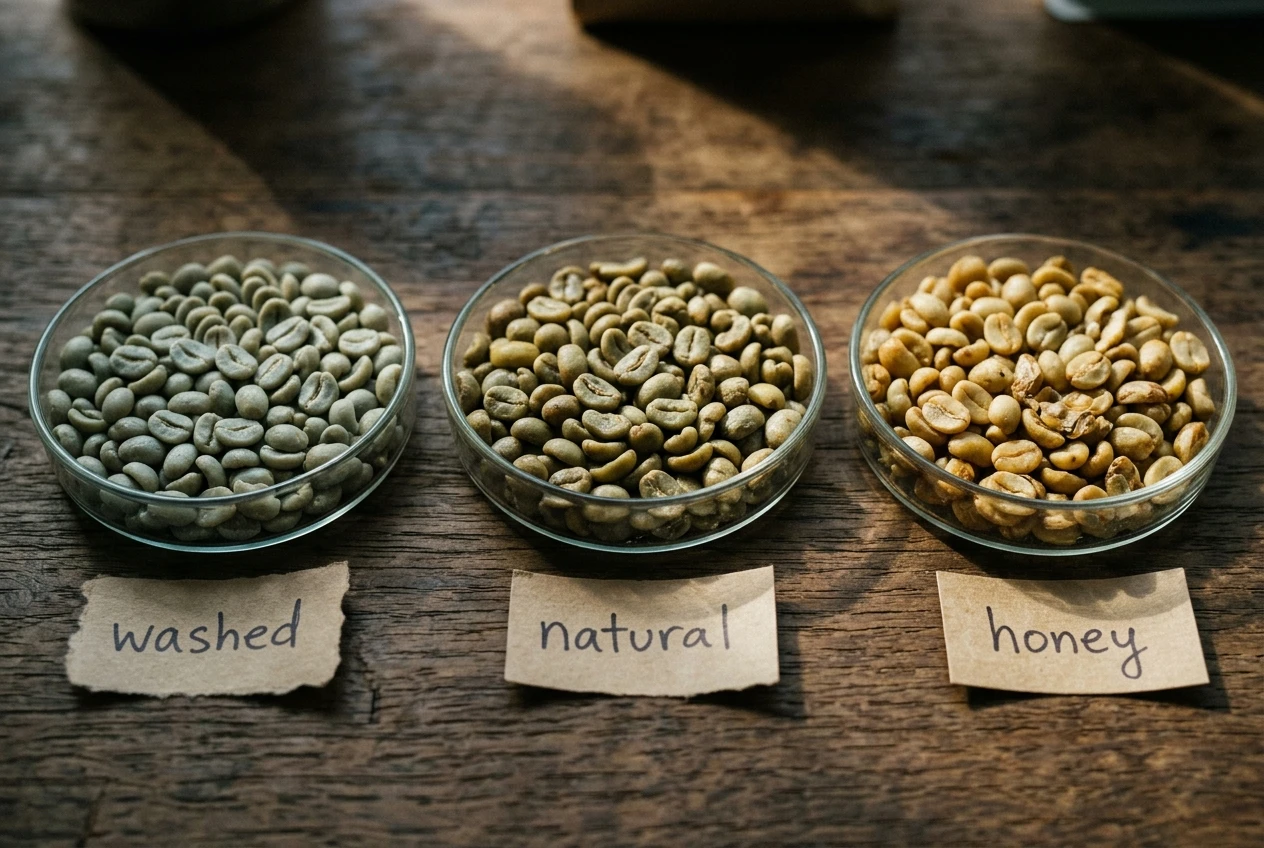
Grading describes the size and quality classification the beans were given before export, often using terms like AA, Grade 1, or SHB (strictly hard bean, referring to the altitude the coffee was grown at). Grading systems differ by country of origin, so an AA from one country isn’t directly comparable to an AA from another. Higher grades generally mean fewer defects and more consistent bean size, both of which make for a more even roast.
A trustworthy listing gives you all three of these details without you having to ask. If a seller can only tell you “it’s a dark roast blend” or can’t answer a direct question about crop year, that’s a sign to look elsewhere.
How much green coffee to buy when you’re still learning
When you’re new to roasting, buy less than feels efficient. A pound or two of two or three different origins will teach you more than five pounds of a single bean, because you’ll start to notice how origin and processing change the way a roast behaves, how quickly it hits first crack, and how the smell develops.
Green coffee shrinks in weight by somewhere around 15 to 20 percent during roasting as moisture cooks off, so a pound of green beans gives you noticeably less than a pound of roasted coffee. Keep that in mind when you’re deciding how much to order for your own drinking habits, not just for learning purposes.
Once you’ve settled on a roaster and have a few roasts under your belt, buying in larger quantities starts to make more financial sense. Early on, though, variety and freshness matter more than volume.
Storing green beans properly before your first roast
Green coffee is more forgiving to store than roasted coffee, but it still needs some basic care. Keep it in a cool, dry, dark place, away from direct sunlight and away from any strong smells it could absorb, since green coffee is porous and will pick up odors from its surroundings.
A burlap or breathable cloth bag is fine for short-term storage, but if you’re planning to hold onto beans for more than a few weeks, a container that isn’t fully airtight but still blocks light and moisture works well. Avoid sealing green coffee in plastic for long periods, since trapped moisture can encourage mold. If your home tends to run humid, a few silica packets in the storage container can help.
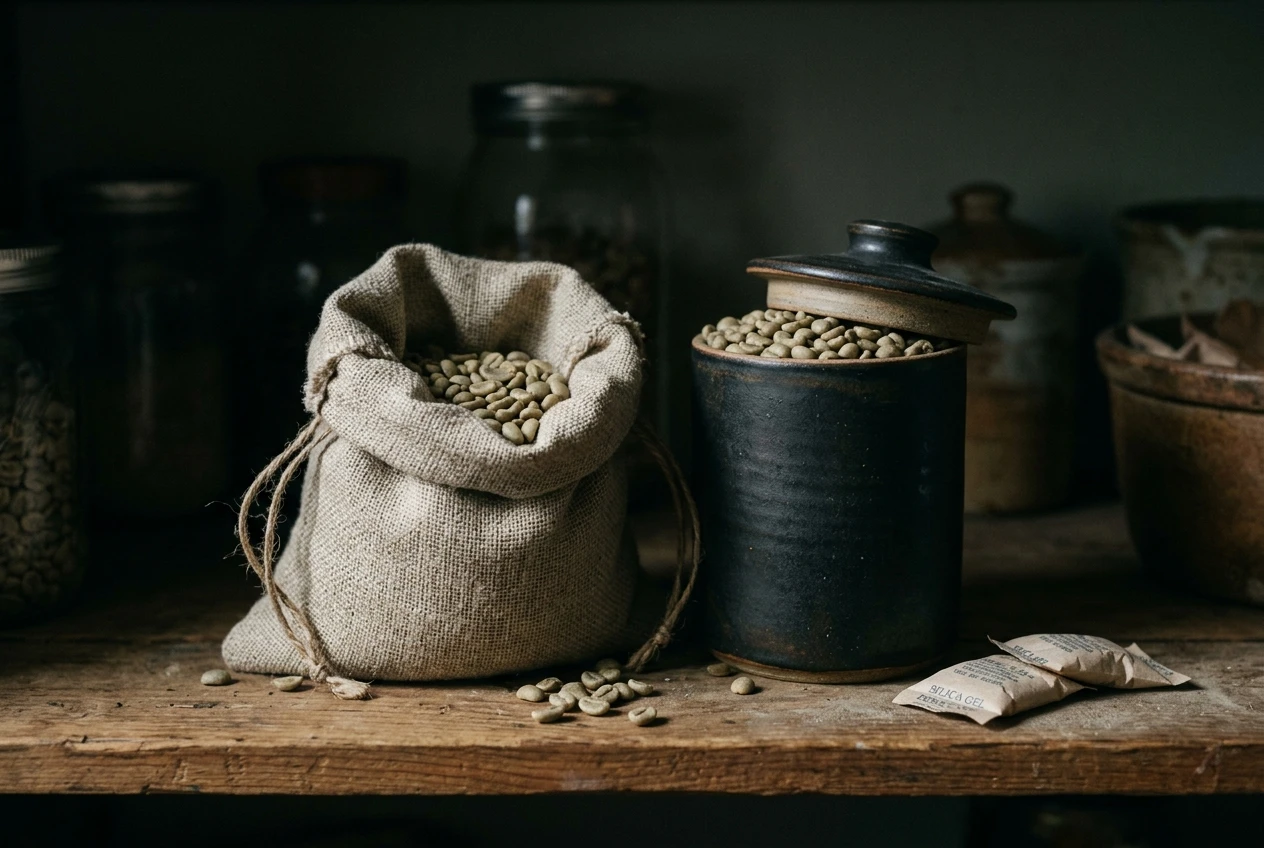
Most home roasters find that green coffee holds its quality reasonably well for six months to a year when stored this way, though it will gradually lose some of its character the longer it sits. Buy what you’ll roast within a few months, rather than stockpiling.
Warning signs of a bad batch or an unreliable seller
Because you don’t have roasting experience yet to judge a bean by taste, you have to judge it by what you can see and smell, and by how the seller behaves.
Watch for:
- A musty, moldy, or sour smell coming from the bag, which usually means poor storage or processing, not something a roast will fix.
- Beans that look faded, discolored, or unusually small and shriveled compared to the photos in the listing.
- A high number of broken, chipped, or insect-damaged beans mixed in.
- Sellers who won’t give you a straight answer on crop year or origin.
- Listings with no return policy at all, or reviews that mention beans arriving stale or mislabeled.
If a batch arrives and something feels off before you’ve even roasted it, trust that instinct. A reliable seller will stand behind what they shipped, and a first bad experience shouldn’t put you off home roasting altogether, it just means it’s time to try a different source.
Once your green beans arrive, head over to How To Roast Coffee Beans At Home: The Beginner’s Guide to turn them into your first roast.